Ontario Freezes Truck Driver Training Funding! Is Getting a CDL About to Become Harder?
by TRUCKERS VA
(UNITED STATES)
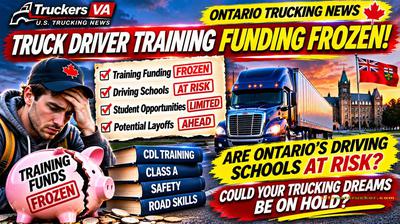
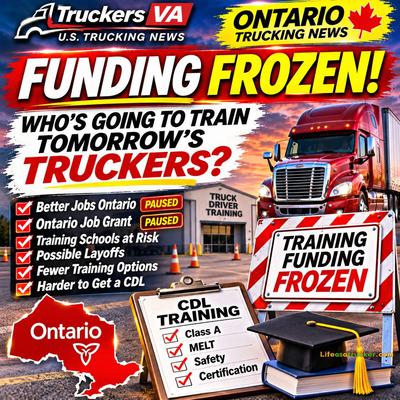
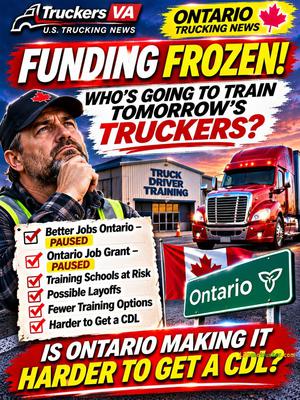
Ontario Freezes Truck Driver Training Funding! Is Getting a CDL About to Become Harder?
Truckers VA | November 14, 2026
Want to become a truck driver in Ontario? You might want to pay attention to this story before making plans for your future.
Government funding that helps people pay for job training has been paused, and Ontario's trucking training industry is sounding the alarm.
Training schools say the decision could put students' career plans on hold, threaten local jobs, and potentially push legitimate truck driver training businesses toward closure.
And here's the uncomfortable question: If Ontario wants qualified, properly trained commercial drivers on its highways, why are training providers worried about losing the financial support that helps people enter the industry?
What's Happening With Ontario's Trucking Training Funding?
The Truck Training Schools Association of Ontario (TTSAO) is asking the provincial government to immediately reinstate two funding programs:
- Better Jobs Ontario: A program designed to help eligible unemployed individuals access training for new employment opportunities.
- Ontario Job Grant: A funding program that supports eligible workforce training through participating employers.
According to TTSAO, the funding pause began October 9, 2026.
The association says the interruption is affecting people hoping to enter the transportation industry and schools that have invested millions of dollars in equipment, training facilities, instructors, and curriculum.
These aren't necessarily fly-by-night operations. Many TTSAO member schools are family-owned businesses that have spent years building their training programs.
Now they're worried about what happens if the funding interruption continues.
Why Did the Government Pause the Funding?
Here's where the story gets complicated.
Ontario has been reviewing public funding provided to private career colleges following concerns about financial aid irregularities.
Government officials have raised questions about questionable course completions, student participation, and whether public money was being used appropriately.
Labour Minister Trevor Jones has acknowledged a review of Better Jobs Ontario following concerns about inconsistencies in how funding was being used.
The government has said it needs to investigate these concerns and protect public funds.
That's a legitimate responsibility. Taxpayer money should be protected, and training programs should deliver the education they're supposed to provide.
But the trucking training industry argues that legitimate schools and students shouldn't automatically suffer because of problems involving other operators.
Training Schools Say They're Paying the Price
TTSAO chairman Ken Adams says the government should focus on high-risk, non-compliant training operators rather than penalizing schools that have invested in meeting industry standards.
The association warns that continued funding interruptions could lead to:
- Layoffs among training school employees.
- Reduced training services.
- Permanent closures of legitimate schools.
- Students abandoning or delaying their trucking career plans.
- Financial pressure on suppliers and businesses supporting training schools.
Think about the ripple effect.
A truck driving school doesn't operate in isolation. It needs trucks, maintenance services, insurance, fuel, instructors, facilities, and administrative staff.
If schools start closing, the financial consequences could spread well beyond the classroom.
What Does This Mean for People Wanting to Become Truck Drivers?
This is probably the biggest concern for aspiring drivers.
Better Jobs Ontario has helped eligible individuals access financial support for career training, including transportation-related programs.
For someone
trying to change careers, that assistance can make the difference between getting started and putting the dream on hold.
Without access to expected funding, some students may have to delay enrollment, find alternative financing, or reconsider their training plans.
That doesn't mean every trucking school is closed or that every funding application has been cancelled.
But prospective students should verify current program availability and eligibility before committing to a school or making financial arrangements.
Ontario Wants Better Truck Driver Training. Here's the Interesting Part.
There's another development worth watching.
Ontario is working on a standardized entry-level training curriculum for new Class A commercial driver's licence applicants.
The provincial government's plan builds on the existing Mandatory Entry-Level Training (MELT) program and calls for more than 103 hours of consistent instruction.
Additional subjects being considered include:
- Fatigue management.
- Northern, rural, and remote driving.
- Human trafficking awareness.
- Mandatory air brake training.
The goal is to ensure new drivers have the knowledge and skills needed to operate commercial vehicles safely.
Here's the contradiction that deserves attention: Ontario wants consistent, high-quality driver training while training providers are warning that funding interruptions could weaken the schools delivering that training.
Both accountability and access to quality education matter. The challenge is finding a way to protect public money without unnecessarily damaging legitimate training providers.
What Happens Next?
TTSAO is calling for the immediate reinstatement of Better Jobs Ontario and Ontario Job Grant funding.
The Women’s Trucking Federation of Canada has also expressed concern, saying access to quality training is important for building a skilled and sustainable transportation workforce.
The government has not provided a confirmed restoration date in the reporting available for this article.
For now, students, schools, and the wider trucking industry are waiting for clarity.
Truckers VA Takeaway: You Can't Build Tomorrow's Drivers by Leaving Training in Limbo
Ontario needs qualified commercial drivers. It also needs legitimate schools capable of providing quality training.
Government accountability is important. Nobody wants taxpayer money wasted on questionable programs.
But legitimate training businesses and people trying to build better careers deserve a clear path forward.
The trucking industry already faces plenty of challenges. Training shouldn't become another unnecessary roadblock for people willing to learn, work hard, and enter the profession.
Ontario needs to protect public funds while ensuring that qualified students and compliant training providers aren't left stranded.
What's Your Opinion?
Should Ontario restore funding for verified, compliant truck driving schools while continuing investigations into questionable training operators?
Or should all funding remain paused until the government completes its reviews?
We want to hear from truck drivers, training school owners, students, and industry professionals.
Leave your thoughts in the comments. This conversation affects the future of trucking.
Thinking About Becoming a Truck Driver?
Don't let confusion about training funding stop you from researching your options.
Visit LifeAsATrucker.com to learn about becoming a truck driver, understanding the career path, and exploring opportunities in the trucking industry.
Already a Trucker? Looking for Additional Income?
Your trucking experience could open doors to opportunities beyond driving.
Explore ideas at TruckersSideHustle.com.
Truckers VA — Report Better News. Real Information for the People Who Keep America Moving.


