FARMERS NEED TRUCK DRIVERS! Can Community Colleges Help Save Agricultural Trucking?
by TRUCKERS VA
(UNITED STATES)
FARMERS NEED TRUCK DRIVERS! Can Community Colleges Help Save Agricultural Trucking?
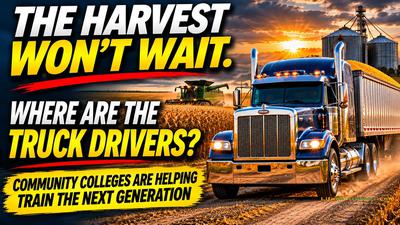
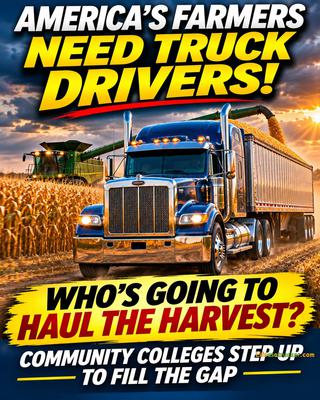
America's agricultural industry has a trucking problem. Farmers need skilled drivers to move crops, operate heavy equipment, and keep harvests moving. Now community colleges are stepping up to help fill the gap. Could this be an opportunity for the next generation of truck drivers?
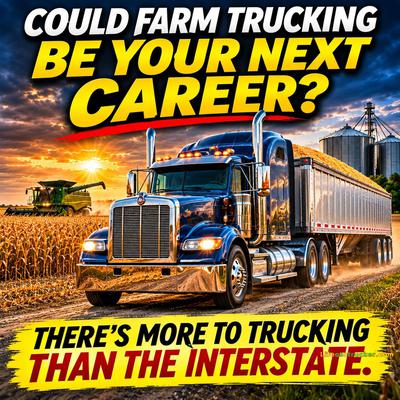
When people think about trucking, they usually picture a tractor-trailer cruising down the interstate, delivering freight across the country.
But there's another side of trucking that doesn't always get the attention it deserves: agricultural trucking.
And right now, farmers are having trouble finding people with the skills needed to do the job.
According to a November 5, 2026 report from Farm Progress, agricultural producers are increasingly relying on community college training programs to help address the shortage of skilled truck drivers.
Because when harvest season arrives, those crops aren't going to haul themselves!
Why Is Agricultural Trucking So Different?
Here's something many people outside the industry may not realize: driving a semi-truck on an interstate and operating one around a working farm can be two very different experiences.
Farm drivers may need to navigate:
- Muddy and uneven fields.
- Loose soil after harvesting.
- Tight farm entrances and loading areas.
- Gravel roads and challenging rural terrain.
- Heavy agricultural equipment and expensive machinery.
- Manual-transmission trucks that require additional operating skills.
In Nebraska's Panhandle, for example, drivers hauling sugar beets may encounter fields where the soil has been disturbed by harvesting equipment.
That fluffy soil creates a completely different driving environment from pavement or gravel.
As Doug Mader of Western Nebraska Community College explained, agricultural trucking requires a different kind of driving experience than simply hopping onto an interstate and covering hundreds of miles.
Translation? Having a CDL doesn't automatically make someone an experienced farm-truck operator.
Farmers Need More Than Someone Who Can Drive
For farmers, finding a qualified driver is about more than filling an empty seat.
Farm trucks and equipment represent significant investments. Employers need people who understand how to operate them safely, navigate difficult conditions, and take care of expensive machinery.
Nebraska farmer Doug Lyons explained that finding trustworthy employees with the right skills is one of his biggest challenges.
And that's understandable. Nobody wants to hand over an expensive truck to someone who isn't prepared for the job.
It also highlights an important issue: employers need to recognize that newly trained drivers still need experience, guidance, and time behind the wheel.
Community Colleges Are Stepping Up
This is where things get interesting.
Western Nebraska Community College (WNCC) is working with local agricultural employers and industry representatives to identify workforce needs and prepare students for jobs in the region.
The college offers diesel technology training and a CDL program designed to help students enter the transportation workforce.
According to the Farm Progress report, the CDL course can be completed in as little as six weeks. It's competency-based, meaning students who demonstrate the required skills may finish earlier.
The program launched in its current form in November 2020 and has helped nearly 200 students move through its training pipeline.
That's a meaningful contribution to a region where agriculture
plays a major role in the local economy.
There's an Opportunity for People Looking for a Trucking Career
Here's the part that future drivers should pay attention to.
Trucking opportunities don't begin and end with long-haul freight.
Agricultural transportation offers another potential career path for people interested in commercial driving.
Depending on the employer and location, opportunities may include:
- Hauling grain and other agricultural commodities.
- Transporting sugar beets and corn.
- Moving agricultural products to processing facilities.
- Supporting livestock feed operations.
- Working with farm and ranch transportation operations.
There is also an important CDL detail worth understanding.
FMCSA provides certain agricultural exemptions that can allow qualifying transportation of agricultural commodities within a 150-air-mile radius without a commercial driver's license. These exemptions have specific conditions and do not apply to every agricultural driving situation.
Farmers and drivers should verify the applicable federal and state requirements before operating a commercial vehicle without a CDL.
Could This Help Address the Truck Driver Shortage?
Community colleges could play an important role in connecting employers with people who want to enter the trucking industry.
They provide structured training, access to equipment, and opportunities to develop practical skills.
More importantly, partnerships between colleges and local businesses can help ensure students are learning what employers actually need.
That's a smart approach. Training people for jobs that exist in their communities makes a lot more sense than graduating students without a clear path into the workforce.
And agricultural trucking isn't going away. Crops still need to move from fields to processing facilities, feedlots, and markets.
Our Take: The Next Generation of Truckers May Be Working the Fields
When people talk about the future of trucking, the conversation often turns to autonomous trucks, electric vehicles, and artificial intelligence.
Those developments are important. But let's not forget the people who actually move America's food supply.
Agricultural trucking is a specialized part of transportation, and it needs drivers who understand more than just how to operate a truck on the highway.
Community colleges helping build that workforce is a practical step in the right direction.
For someone considering a trucking career, this is also a reminder to explore opportunities beyond traditional over-the-road driving.
Because sometimes the road to a trucking career doesn't start on the interstate. It starts in a farm field.
Interested in Becoming a Truck Driver?
If you're considering a career in trucking, learning about your training options, CDL requirements, and different types of driving jobs is a great place to start.
Visit Life As A Trucker for information and resources to help you explore the trucking industry and take your first steps toward becoming a professional driver.
Already driving and interested in earning additional income? Explore Truckers Side Hustle for ideas and opportunities beyond the driver's seat.
Join the Conversation
We want to hear from the trucking community!
Did you know agricultural trucking required such specialized skills? And would you consider hauling agricultural commodities as a career?
Share your thoughts. Experienced drivers have knowledge that the next generation can learn from.
Stay informed. Keep learning. Keep those wheels turning!
Source: Farm Progress, Elizabeth Hodges, November 5, 2026. Read the original report.


